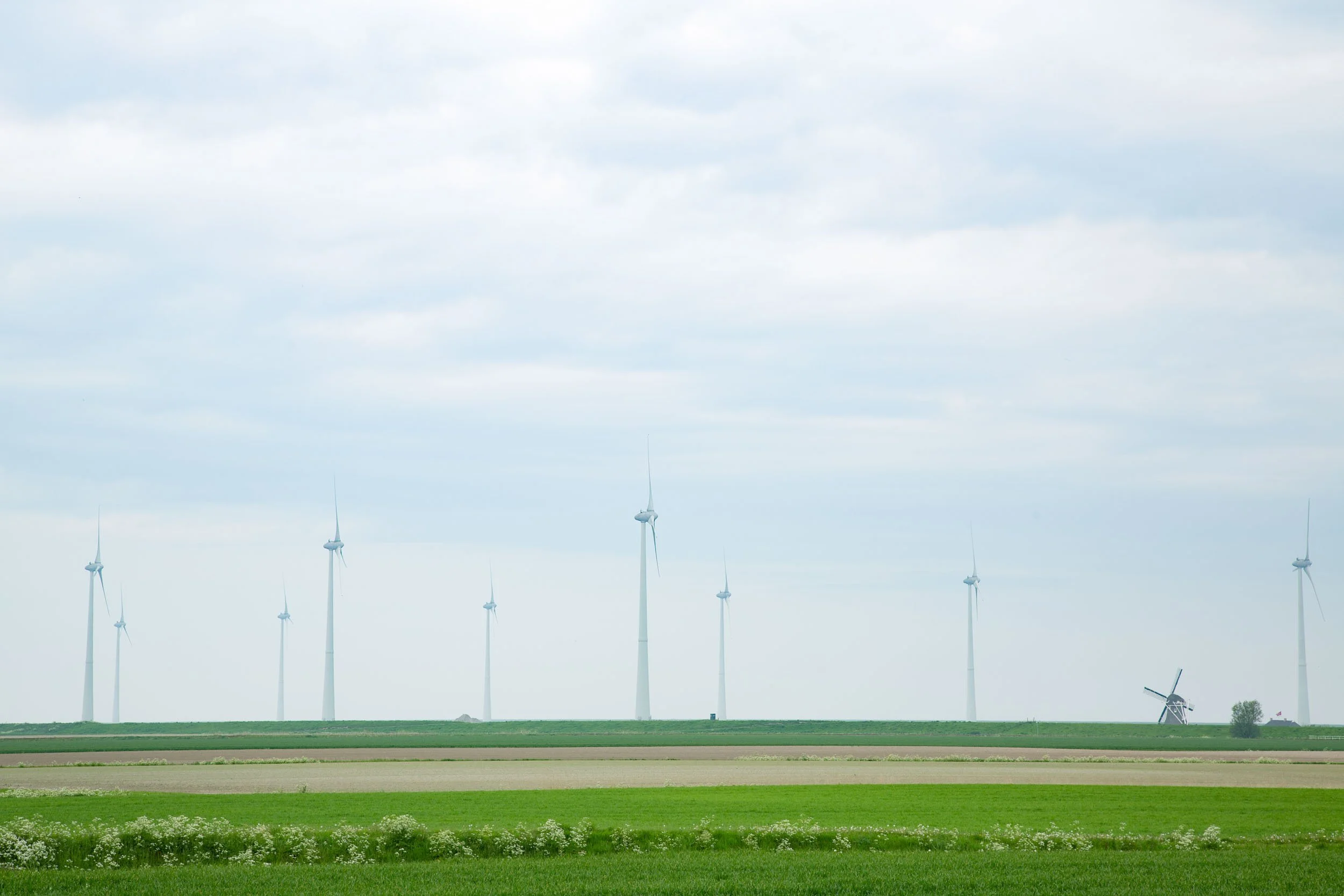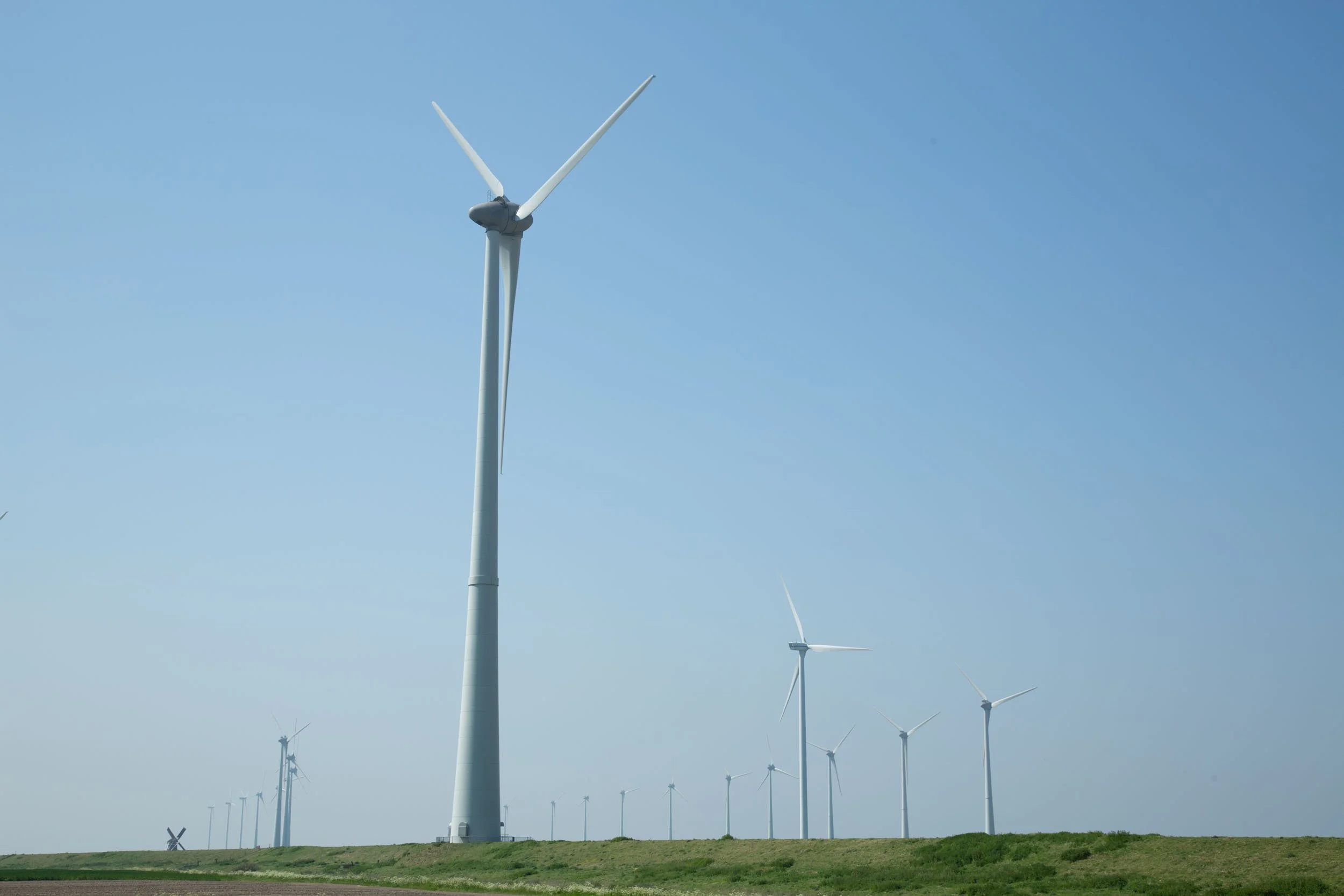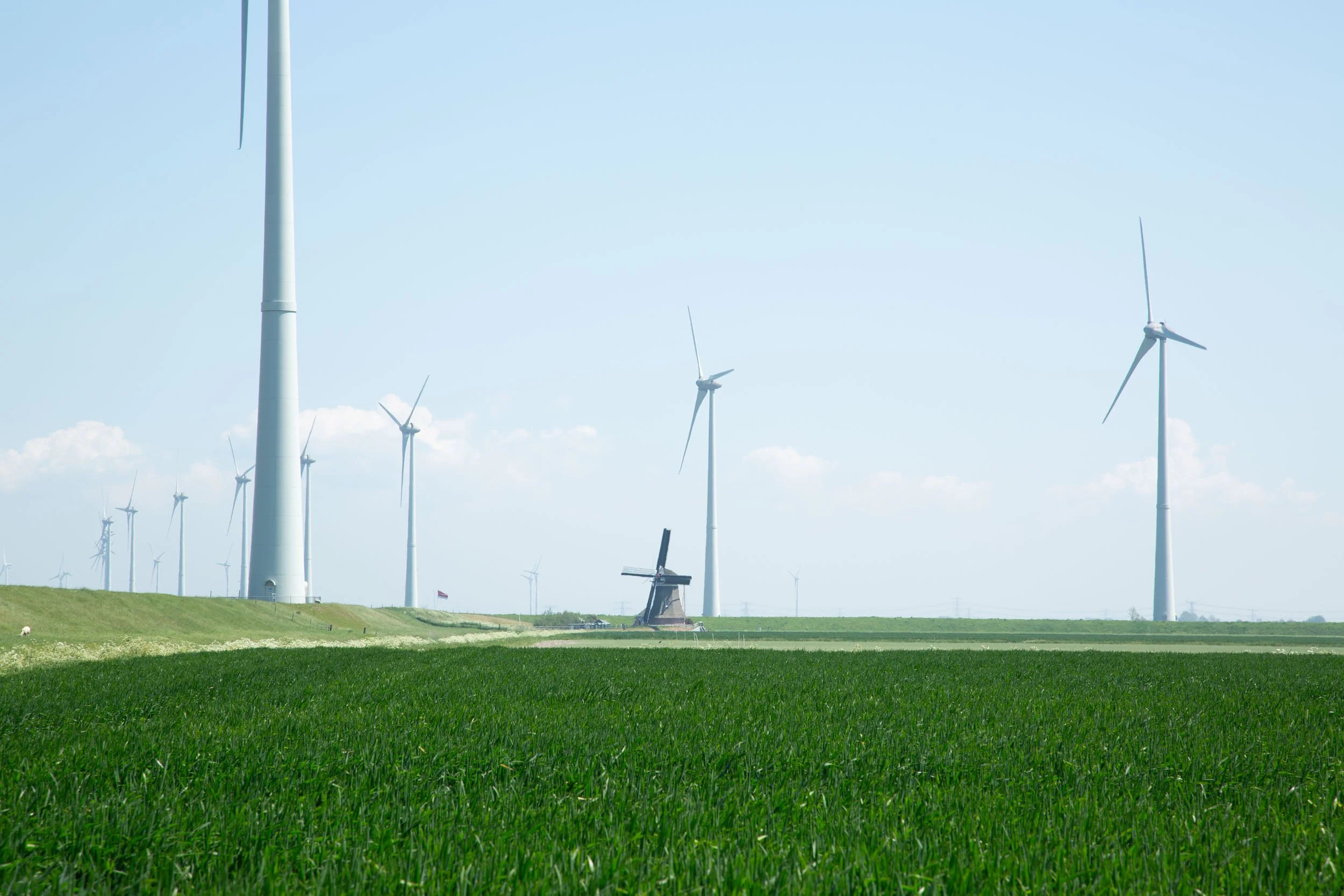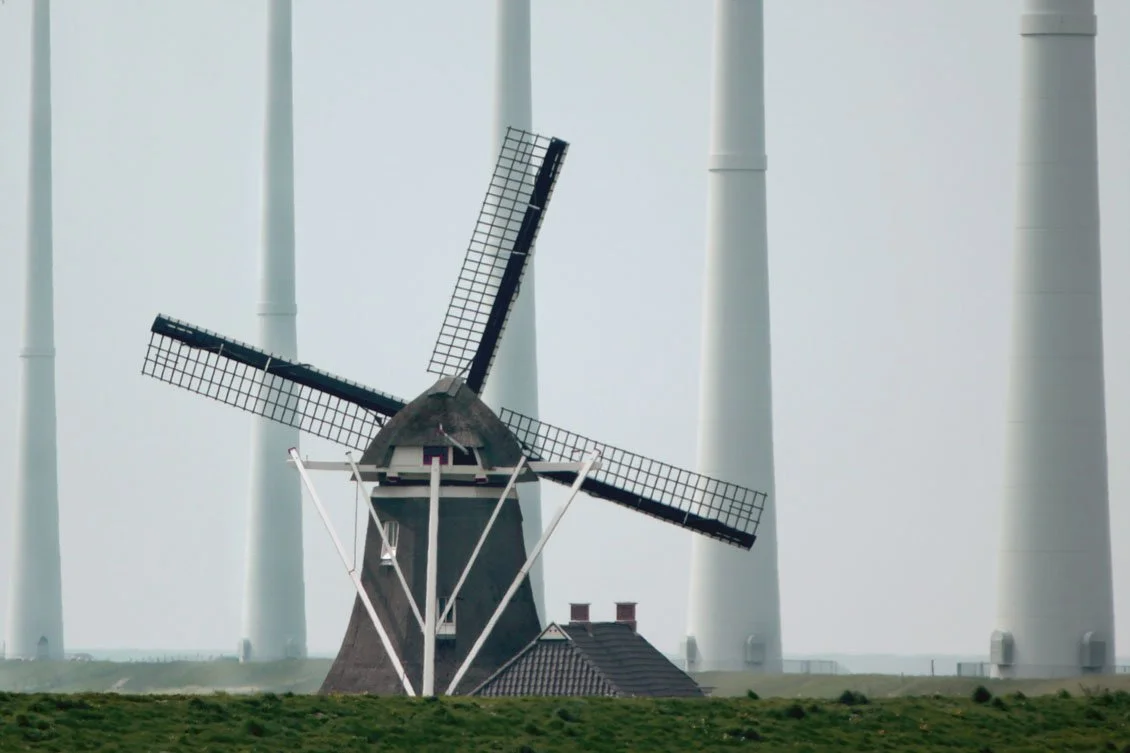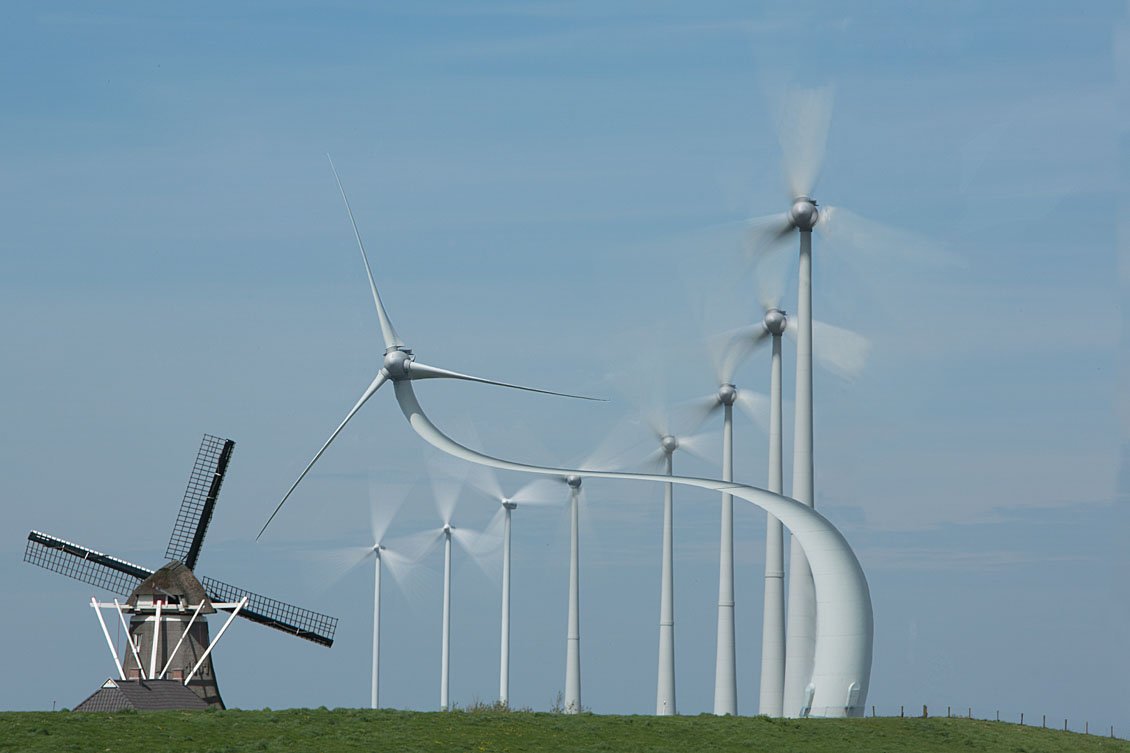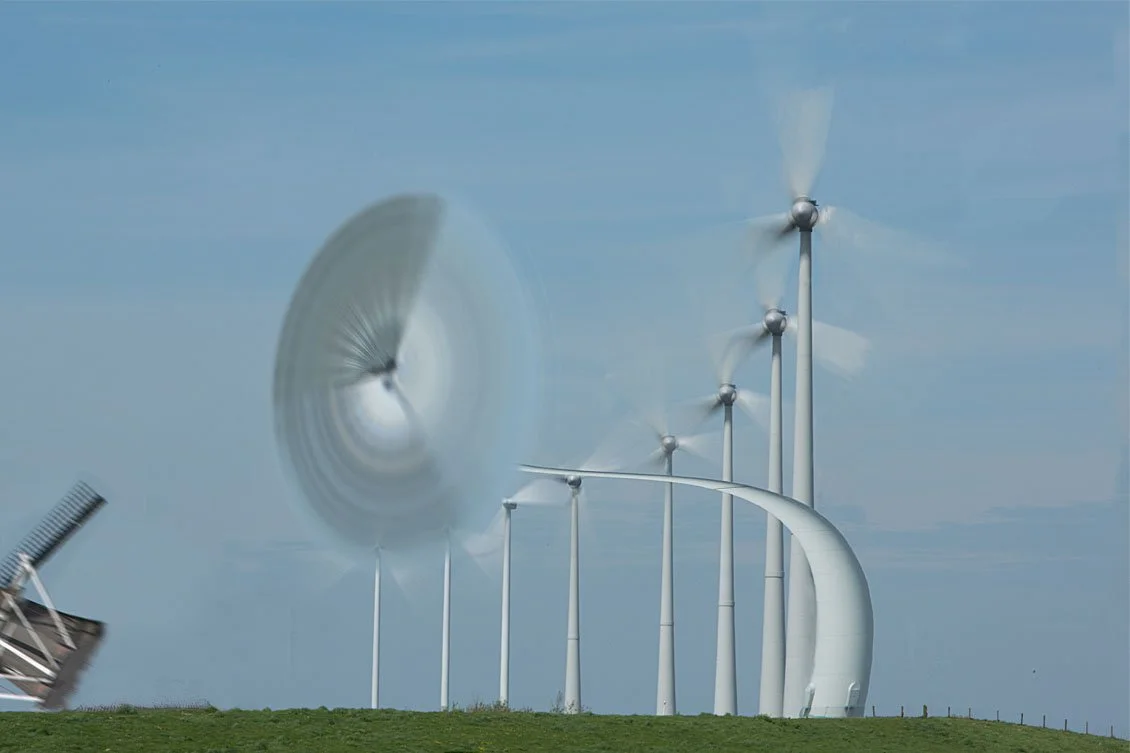
Goliath is the northernmost windmill in the Netherlands, located along the Groningen coast. From 1876 until 1979, it was used to drain the surrounding wetlands. The Groningen landscape is defined by vast, open spaces, and the introduction of large turbines inevitably transforms any landscape in which they are placed. Landscapes change, both through natural processes and through human intervention, and the speed at which these changes occur often provokes strong emotional responses.
When society adopts new goals, not only the landscape itself changes, but also the way it is perceived by the viewer. The Dutch landscape has been in a constant state of transformation for centuries; the very act of reclaiming land from the sea was a technological undertaking that profoundly reshaped it. With the arrival of wind turbines, a new and inevitable era has begun, one in which clean energy is essential.
In some locations, the relationship between turbines and the landscape can be harmonious. However, in this particular place, the Eemspolder, it is my personal view that even a small number of turbines already create a sense of visual saturation. They do little justice to the traditional Groningen landscape, nor to the legacy of Goliath. This naturally raises the question: “If not here, then where?” Would it not make more sense to place turbines in less open landscapes, where their presence is less dominant and visually intrusive?
Serie photographed in 2012